HOME > BOARD COMMITTEES
The Board Committees are formally constituted and are chaired by non-executive Board members. The Board Committees assist the Board in the performance of duties and enables effective decision-making through providing more detailed attention to matters within their respective terms of reference. The Committees report to the Board on their activities at every quarterly Board meeting. In terms of the Water Services Act and King IV, the Board is authorised to delegate powers to the Committees established by the Board. The functions and powers delegated to Committees are set out in the written Terms of Reference, which are formally approved by the Board and are reviewed frequently.
Those charged with governance are required by law to avoid conflicts of interests, in cases where such conflict cannot be avoided, it should be disclosed to the Board in full and at the earliest opportunity, and then proactively managed subject to legal provisions. At the start of a financial year, each member of the Board is required to submit a declaration of all financial, economic and other interest held by a member and related parties or whenever there are significant changes.
At the beginning of each meeting of the Board or its committees, all members are required to declare conflict of interest in relation to matters on the agenda. During the period under review, no conflict of interests were declared by the members.
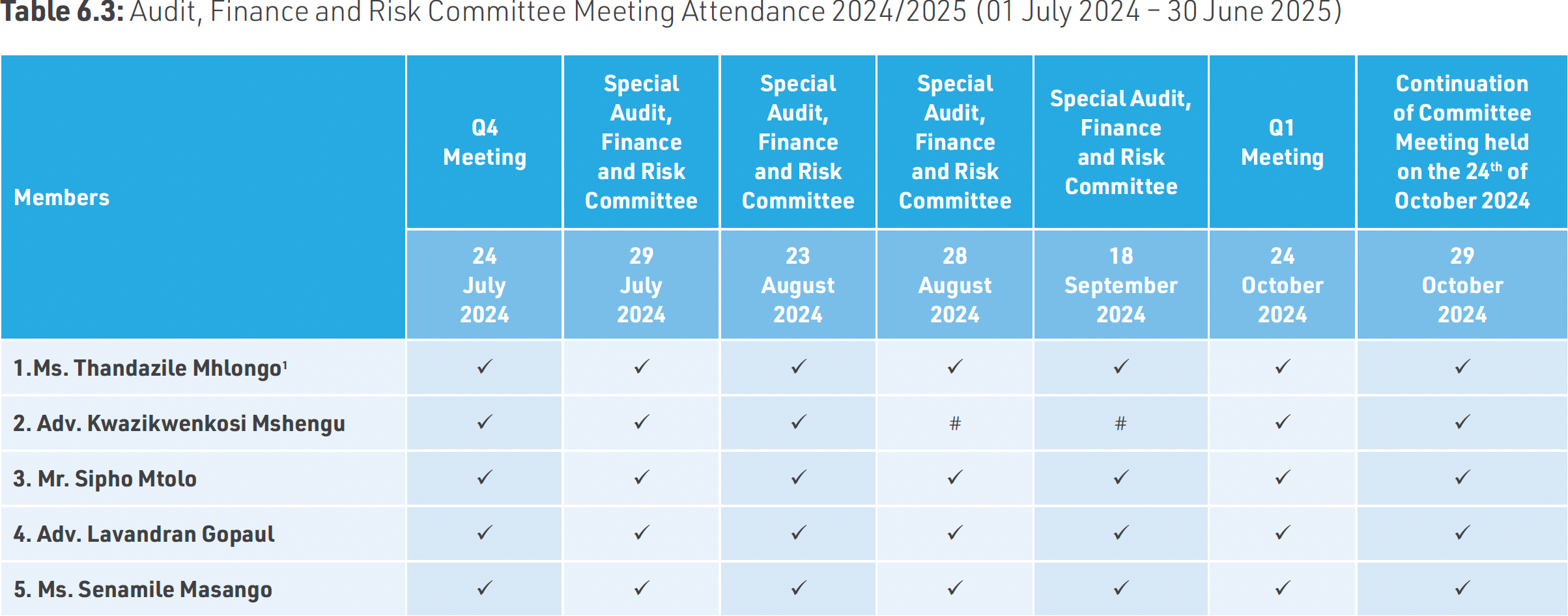
The Committee is mandated to exercise oversight and ensure achievement of the highest level of financial management, accounting and reporting to the Shareholder
and to meet the requirements prescribed in section 51(1) (a)(ii) and 76(4)(d) of the Public Finance Management Act (Act 29 of 1999), as well as Treasury Regulations, 2005 (Chapter 27.1). The Audit, Finance and Risk Committee’s oversight responsibility extends to internal controls, and performs a critical function of risk management oversight by ensuring the effectiveness, quality, integrity and reliability
of uMngeni-uThukela Water’s risk management processes.
The terms of reference of the Audit, Finance and Risk Committee take into account the recommendations in King IV, the Companies Act (Act 71 of 2008), the Public Finance Management Act (Act 29 of 1999) as amended and Treasury Regulations, 2005, to ensure alignment to best practice and legislation.
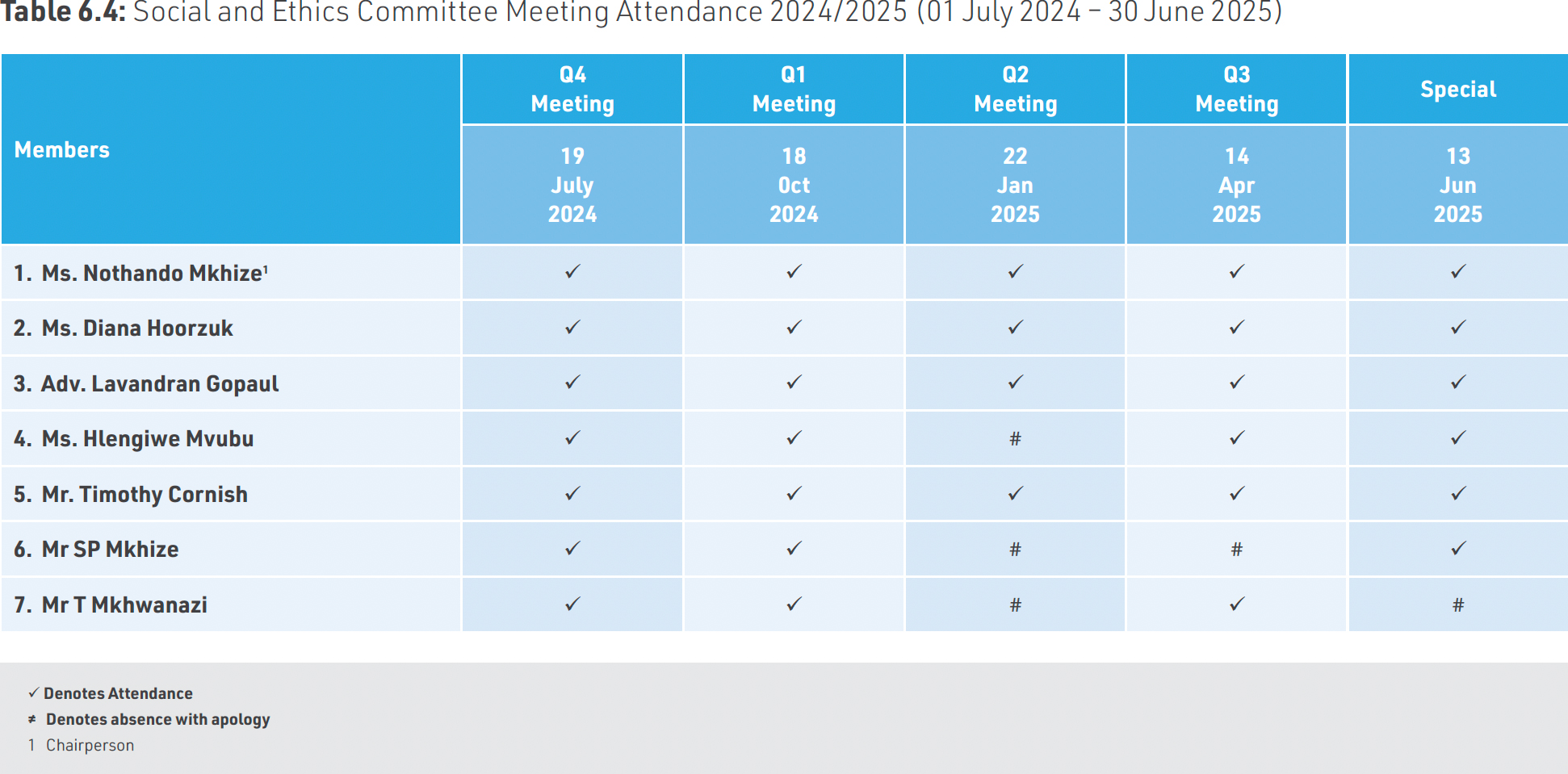
The Board acknowledges its responsibility to ensure that uMngeni-uThukela Water is a fair, transparent and ethical entity and continues to exercise its main responsibility for oversight and reporting on organisational ethics, responsible corporate citizenship, sustainable development and stakeholder relationships as stated in the King IV Report on Corporate Governance, Paragraph 68 to 70 under Principle 8.
The Social and Ethics Committee accounts to the Board. Any high-risk areas identified are managed and mitigated at that level. The Committee provides assurance to the Board that there are effective ethics management systems, institution-wide prevention of fraud and corruption and ensures that complaints are managed effectively, followed up appropriately and investigated competently.
The Committee consists of five (5) non-executive directors and the Chief Executive, the Committee is chaired by an independent non-executive director. A code of ethics has been approved by the Board and provides guidelines for ethical decision-making by all employees, board members, and stakeholders. The code formally acknowledges the organisation’s intent to undertake business in an ethical manner and is communicated to all employees through various awareness and communication forums and programmes.
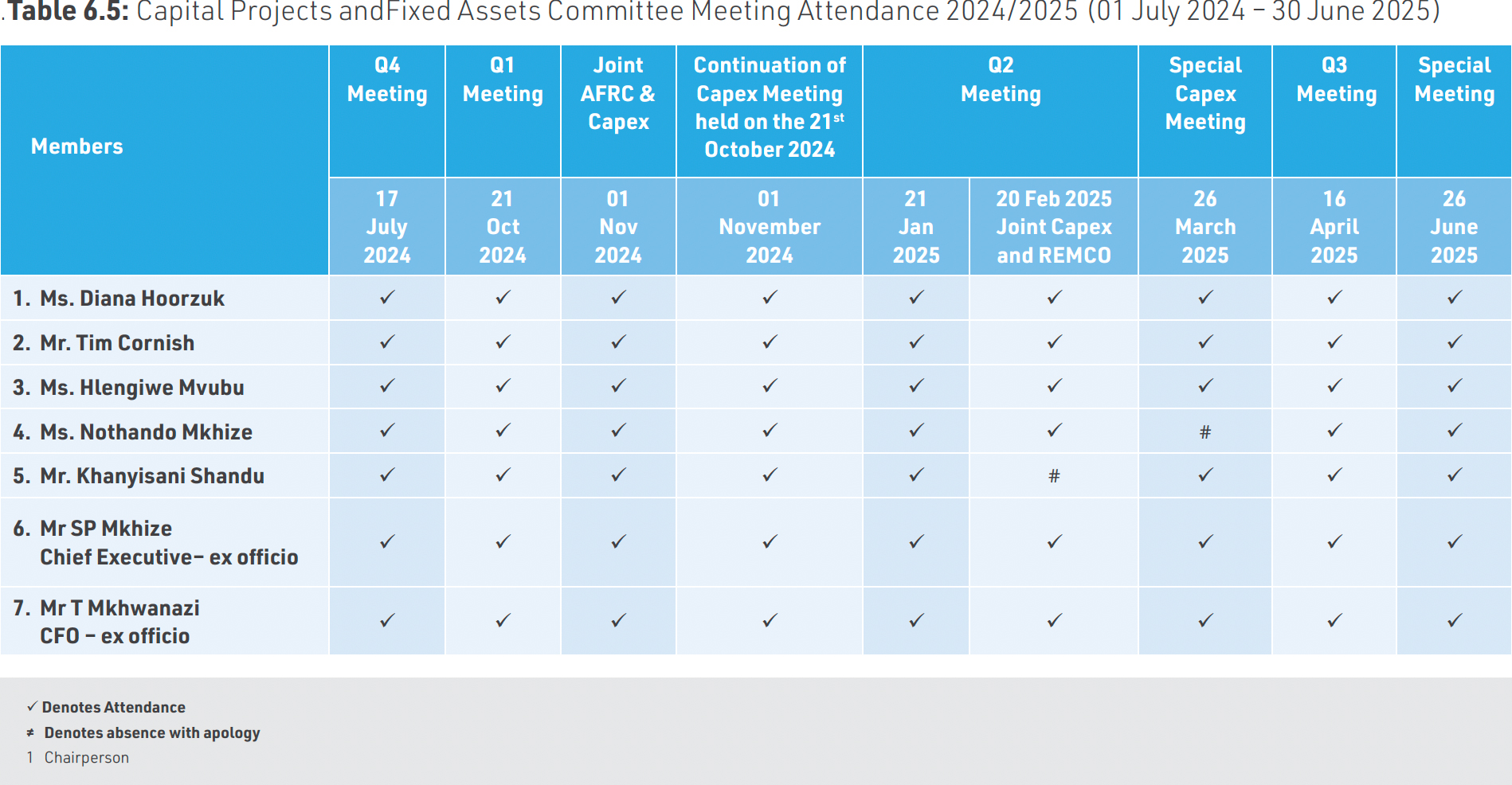
The capital projects and fixed assets committee (“Capex Committee”) is established to assist the Board to discharge key performance outcomes that are consistent with the following aspects of uMngeni-uThukela Water’s strategy:
uMngeni-uThukela Water continues to enhance its compliance management system. The entity continued to use its Legal Compliance Regulatory Universe, Compliance Checklists and Compliance Monitoring/Assurance Plan for monitoring and reporting Legal Compliance. The areas of non-compliance that were flagged in the year are receiving the necessary attention.
Objective
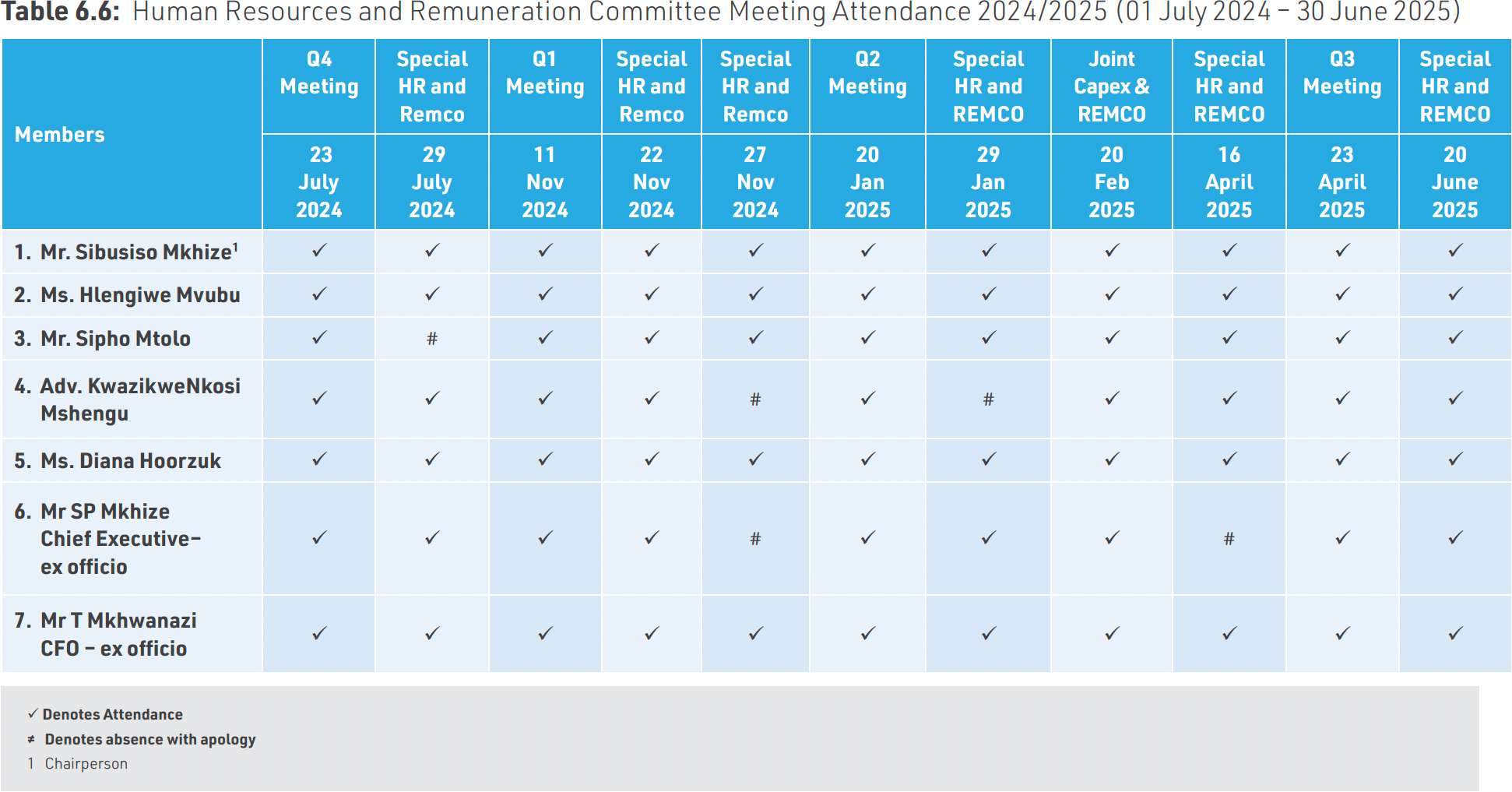
The Human Resources and Remuneration Committee (“the Committee”) is a Committee of the Board, comprised wholly of Non-executive directors and whose responsibility covers providing strategic guidance and oversight over human resource issues and matters connected therewith, recommending appointment of Executive Management, remuneration and benefits framework to the Board.
Key Responsibilities of the HR and Remuneration Committee
The Committee provides strategic guidance and oversight over human resource issues and matters connected therewith, including any strategic restructuring, realignment and reorganising of the organisation, in particular on the following
key focus areas: